

AI in maintenance: what to vibe-code and what to buy
You can bake your own bread, but you still go and buy it. Maybe that is a fallacy, but a comparison is due. So should you start baking your own software?
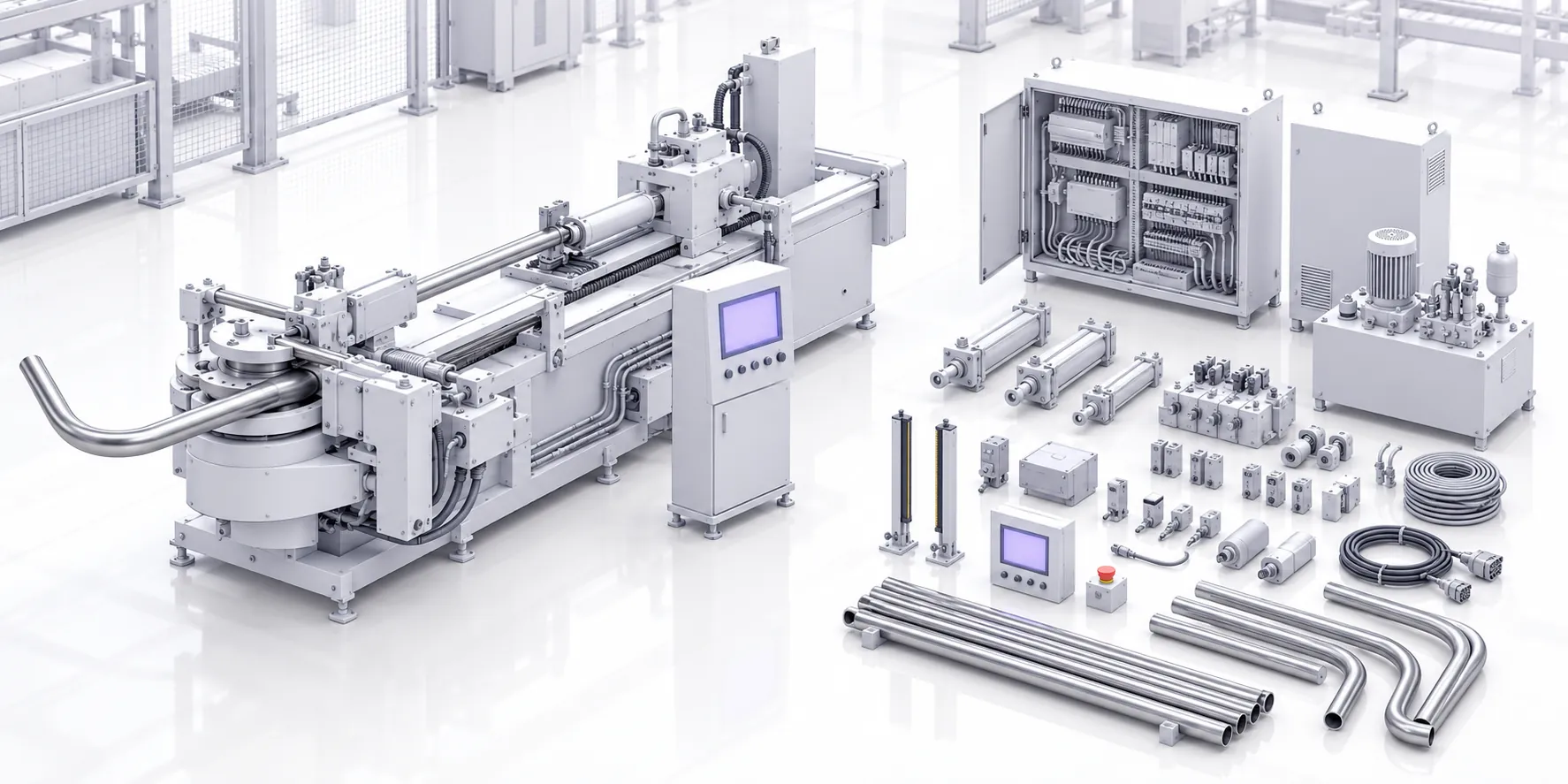
Picture this: you open ChatGPT and type Build me a tube-bending line. It thinks for a moment, tells you it’s generating the line, and you sit back and wait for your machine.
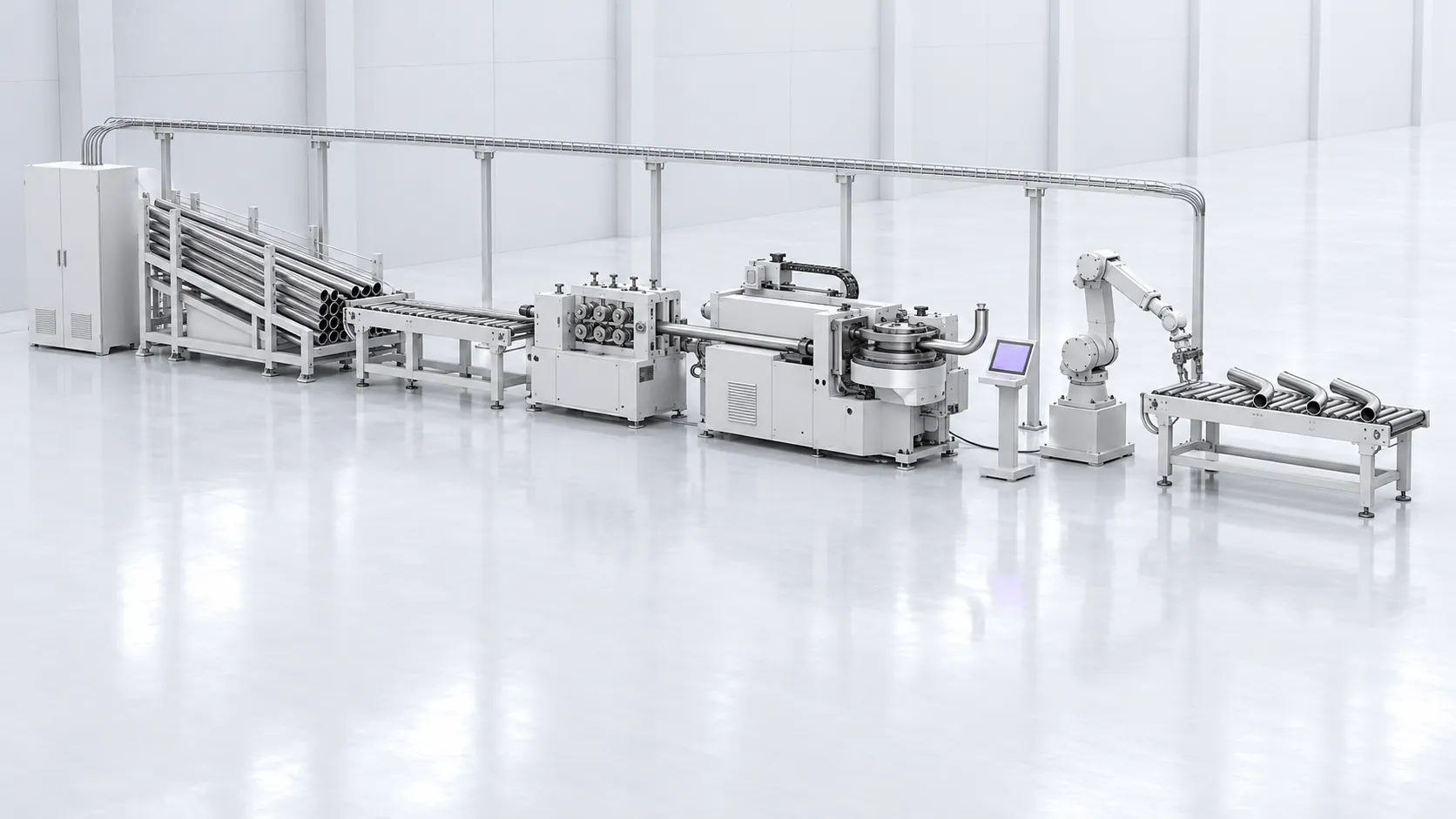
Anyone who has ever stood next to a machine during commissioning is laughing by now. Behind that one sentence there’s a control cabinet and its wiring, the PLC program, pneumatics and hydraulics, sensors and safety circuits, fault resets, the HMI, a risk assessment and CE marking. Then come weeks of commissioning and tuning before the first good bend. Nobody expects a chatbot to deliver that, and it can’t.
Build me a tube-bending line.
Generating the line
The line needs
- Control cabinet and wiring
- PLC control
- Pneumatics and hydraulics
- Sensors and safety circuits
- Fault resets and error handling
- HMI and other peripherals
- Risk assessment and CE marking
- Commissioning and tuning
An AI assistant for maintenance needs
- DevOps and CI/CD
- Kubernetes pods and scaling
- Concurrent job processing
- Deterministic logic outside the LLM
- Model changes and regression tests
- Permissions, SSO and audit
- Monitoring, backups and recovery
- Sync with the ERP and PLCs
With software, plenty of people expect exactly that now. With vibe coding, where you describe what you want to an AI tool and let it write the code, a chatbot over your manuals really can be up and running by Monday. Maybe someone on your team has already said it in a meeting: we could build this ourselves. And the demo will look great.
An AI assistant for maintenance has its own cabinet and wiring behind it, though. They just don’t show up in the demo, but you will feel it on the shopfloor when the money is burning and time is running.
You can have a prototype in days, but making sure it runs well takes years
Say the demo works. It’s Friday afternoon, the assistant answers questions from a few PDFs, and everyone in the room is impressed. Then it meets the night shift.
On the line, it has to read scanned manuals and EPLAN schematics reliably, pull live data from SQL, the ERP and the PLCs, and answer with a reference to its source, so the technician can check the answer before opening a cabinet. A prototype skips all of this, and it’s most of the work.
After launch, the work keeps coming. Someone has to run the cloud, the language model, the data sync, the company sign-in, the monitoring and the backups, for years. When the assistant goes down at two in the morning, someone has to bring it back up.
It also reads production data, the ERP and the PLC programs, so it has to pass your ISMS like any other system with that kind of access. Since NIS2, that’s a question for management too: in the companies it covers, management has to approve the cybersecurity measures, oversee them and answer for failures (NIS2, Article 20). Medium and large manufacturers of vehicles, machinery, electrical equipment and food are among them. In Czechia, the directive applies through Act No. 264/2025 Coll., in force since 1 November 2025.
Then there’s the model under the hood. Language models change every few months, and the old versions get switched off. Every Claude model released before September 2025 has already been retired (Anthropic), and OpenAI gives at least six months’ notice before it retires a generally available model (OpenAI). Each switch changes how the assistant answers, so after every one, someone has to test the answers again, improve it and make sure that it is reliable.
- Switched off
- In use today
- Switch-off announced
- Sonnet 3, released 4 March 2024, switched off 21 July 2025
- Opus 3, released 4 March 2024, switched off 5 January 2026
- Haiku 3, released 13 March 2024, switched off 20 April 2026
- Sonnet 3.5, released 20 June 2024, switched off 28 October 2025
- Sonnet 3.5 (new), released 22 October 2024, switched off 28 October 2025
- Haiku 3.5, released 4 November 2024, switched off 19 February 2026
- Sonnet 3.7, released 24 February 2025, switched off 19 February 2026
- Sonnet 4, Opus 4, released 22 May 2025, switched off 15 June 2026
- Opus 4.1, released 5 August 2025, switched off 5 August 2026
- Sonnet 4.5, released 29 September 2025, to be switched off 30 November 2026
- Haiku 4.5, released 15 October 2025, in use today
- Opus 4.5, released 24 November 2025, in use today
- Opus 4.6, released 5 February 2026, in use today
- Sonnet 4.6, released 17 February 2026, in use today
- Opus 4.7, released 16 April 2026, in use today
- Opus 4.8, released 28 May 2026, in use today
- Fable 5, released 9 June 2026, in use today
- Sonnet 5, released 30 June 2026, in use today
- Opus 5, released 24 July 2026, in use today
- Fable 5.1, released 1 September 2026, in use today
- Opus 5.5, released 22 September 2026, in use today
- Sonnet 5.5, released 28 September 2026, in use today
- Haiku 5.5, released 7 October 2026, in use today
Release to switch-off on the Claude API. Source: Anthropic.
And someone has to own it: collect what maintenance asks for, decide what comes first and say no to the rest. In most plants, that lands on a person who already has a full-time job, often the one who built the prototype. While they look after the assistant, the machines, the projects and support for production wait. And if they leave or move to another role, what they knew about the system leaves with them.
- Product ownerRequests and priorities
- DeveloperFeatures and connectors
- AI engineerModel changes and retests
- IT operationsCloud, backups, night calls
- SecurityISMS, NIS2 and audits
- SupportQuestions from the shift
At a software company, each of these is a position of its own.
Add it all up and you’re paying developer and product-owner salaries, infrastructure, model fees and audits, every year. Every new feature, like another connector or another language, is a project of its own.
| Reason | Building your own | Edmund | |
|---|---|---|---|
| A prototype isn’t production | Production needs reliable reading of scans and EPLAN schematics, live connections to SQL, ERP and PLC, and answers that link to their source. | A finished platform with connectors for manuals, EPLAN, PLC programs, SQL databases and ERP. | |
| Infrastructure | Cloud, language model, data sync, company sign-in, monitoring and backups. All of it deployed and maintained for years. | In standard SaaS operation, Edmund provides it. From you, we mainly need access to the data. | |
| Security and NIS2 | The assistant reads production data, ERP and PLC. NIS2 raises management’s accountability. The tool has to pass your ISMS. | ISMS certified to ISO/IEC 27001 with regular audits. You vet a single supplier. | |
| Model changes | Models change every few months and old versions get switched off. After every change, the answers have to be tested again. | Edmund moves to new models and runs the regression tests once, for all customers. | |
| Care after launch | When the person who built it leaves or changes role, the knowledge of the system leaves with them. | Operation, monitoring, fixes and support are part of the service. Responsibility is set by contract. | |
| The system needs an owner | Collecting maintenance requests, setting priorities and being able to say no. It usually falls to someone who already has a full-time job. | Edmund’s product team. The roadmap comes from maintenance requests in automotive, packaging, food and furniture plants. | |
| Your people’s time | The person from IT or maintenance who builds and runs the assistant falls behind on their own work: machines, projects and production support. | IT and maintenance get on with their own work. Edmund’s team builds and runs the assistant. | |
| Cost | Salaries for developers and a product owner, infrastructure, model fees, audits. Every new feature is a new project. | A yearly licence with a price known in advance. New features are included. |
Bought AI solutions succeed more often, in-house ones end sooner
You don’t have to take our word for it. The research points the same way, although each study measures something different. Two of the four come from software vendors, as this post does.
AI tools that reached deployment
- 67% Bought from specialized vendors
- 33% Built in-house
MIT NANDA, interviews at 52 organizations, 2025
Software built in-house or with vibe coding
- 45% Coding tasks where AI wrote an OWASP Top 10 flaw Veracode, 80 tasks, 100+ models, 2025
- 71% IT and security leaders who abandoned a tool they built Exclaimer, 2,000+ IT and security leaders, 2025
- 60% Vibe-coded apps retired by 2028 Gartner forecast, June 2026
Each square is 1 in 100. Outlined squares are a forecast.
Researchers at MIT’s Project NANDA talked to people at 52 organizations about their generative AI projects. Tools bought from specialized vendors reached deployment about 67% of the time, internal builds about 33% (MIT NANDA, The GenAI Divide).
Veracode gave more than 100 language models the same 80 coding tasks. In 45% of the test cases, the code contained a vulnerability from the OWASP Top 10, the best-known list of web security risks (Veracode, 2025). A year later, the average security pass rate is 56%, about where it started (Veracode, 2026). In Veracode’s words, the models are getting better at writing code that works, but not at writing code that’s secure.
Exclaimer asked more than 2,000 IT and security decision-makers about the tools they build in-house. 71% said they had built one and later abandoned it, and in manufacturing and finance, 83% of internally built tools end up abandoned (Exclaimer, November 2025).
And Gartner expects that by 2028, 60% of applications built with vibe coding will be retired because they don’t deliver predictable business value (Gartner, June 2026).
Buy the AI assistant for maintenance and build the simple tools yourself
None of this means you shouldn’t build anything. Building with AI is worth it for simple internal tools: a report, a converter for an export, an overview for one department. They don’t touch the ERP or the PLCs, and if one breaks, production keeps running. Your team learns to work with AI along the way, too.
An AI assistant for maintenance is a different case. The shift relies on it to find the cause of a fault, it reads the ERP, the databases and the PLCs, and in many plants the cybersecurity law applies to it. Most of the work comes after launch: the infrastructure, the security, the model changes and support on the night shift.
Build it yourself
Simple internal tools
A report, an export converter, an overview for one department
- Doesn’t touch the ERP or the PLCs
- If it breaks, production keeps running
- Your team learns to work with AI
Buy
The AI assistant for maintenance
The one the shift asks when a machine stops
- The shift relies on it to diagnose faults
- It reads the ERP, the databases and the PLCs
- Cybersecurity law applies to it
- Most of the work comes after launch
 Edmund runs the assistant and looks after its security. Your team builds the simple tools next to it.
What buying looks like with Edmund
Edmund is that assistant, already built and already running in plants. It reads PLC programs from TIA Portal, Allen-Bradley and Omron, electrical drawings from EPLAN and CAD, manuals, maintenance journals including handwritten notes, and live data from MES, ERP and time-series databases. Every answer comes with its source, and a cited source opens at the right page. When your data holds no answer, Edmund says so.
The parts that sink a homemade assistant are on us. In standard SaaS operation we run the infrastructure, our ISMS is certified to ISO/IEC 27001 and audited regularly, and when a model changes, we move to the new one and run the regression tests once, for every customer. The roadmap comes from what leading maintenance teams in industries like automotive, packaging and many more plants ask for. You pay a yearly licence with a price you know up front, and new features, hyper care and onboarding come with it.
At Amcor Flexibles in Nový Bydžov, technicians started using Edmund on the first day, after a short onboarding. Fault diagnosis got 90% faster, repairs got 26% shorter, and the plant saves around 440 man-hours a year. At Model Obaly, more than 300,000 pages of documentation are now available right at the machine, and AI in maintenance can cut downtime there by up to 30%.
Your team can keep building the simple tools next to it. If you’d like to see Edmund on your own line, send us a fault that’s been giving you trouble.
Frequently asked questions
Can you vibe-code an AI assistant for maintenance?
You can vibe-code a prototype in a few days: a chatbot that answers from a few documents. An assistant the night shift can rely on also needs reliable reading of scans and schematics, live data, answers with sources, security and years of upkeep, and that’s the part vibe coding doesn’t cover.
Should you vibe-code your AI assistant for maintenance or buy it?
Vibe-code the simple internal tools yourself, like reports, export converters or an overview for one department. Buy the assistant the shift relies on to diagnose faults: it reads the ERP, databases and PLCs, has to meet your security rules and needs most of its work after launch.
What does it cost to run your own AI assistant?
Developer and product-owner salaries, cloud infrastructure, model fees and security audits, every year, plus the time of the IT or maintenance people who look after it. Each new feature is another project.
Does NIS2 apply to an AI assistant?
NIS2 applies to companies, not to individual tools. If your company falls under it, an assistant that reads production data, the ERP and PLC programs is part of the cybersecurity risk management your management has to approve and oversee. In Czechia, that’s set by Act No. 264/2025 Coll.
What is vibe coding?
Building software by describing what you want to an AI tool and accepting the code it writes, often without reading it closely. It’s quick for prototypes and simple tools. Gartner expects 60% of vibe-coded applications to be retired by 2028.