

Flexible packaging plant in Nový Bydžov, part of Amcor plc (NYSE: AMCR). Measured over one year.
26%
faster repairs
€190K
a year back at the plant
AI debugging platform for automotive lines. Edmund reads your PLC programs, electrical drawings, manuals and maintenance logs, and tells your technicians why the line stopped, with the source for every step.


Found the servo control block FB 1343 Faulhaber MCBL. The drive is enabled when it is online, not cancelled, and a motion command (Home / Jog / Positioning) requests it.
142//Go Hall Zero 143IF #GoHallZero AND NOT #Cancel AND NOT #Stop THEN 144 IF NOT #status.enabled THEN 145 #state.enable.start := true; 146 END_IF; 147 #state.goHallZero.start := true; 148 #status.done := false; 149END_IF;
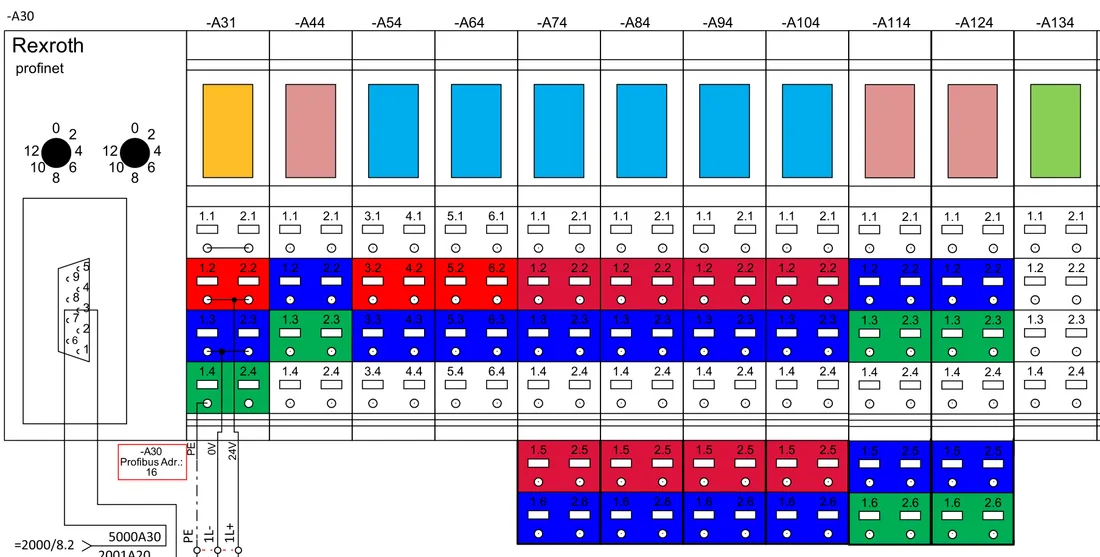
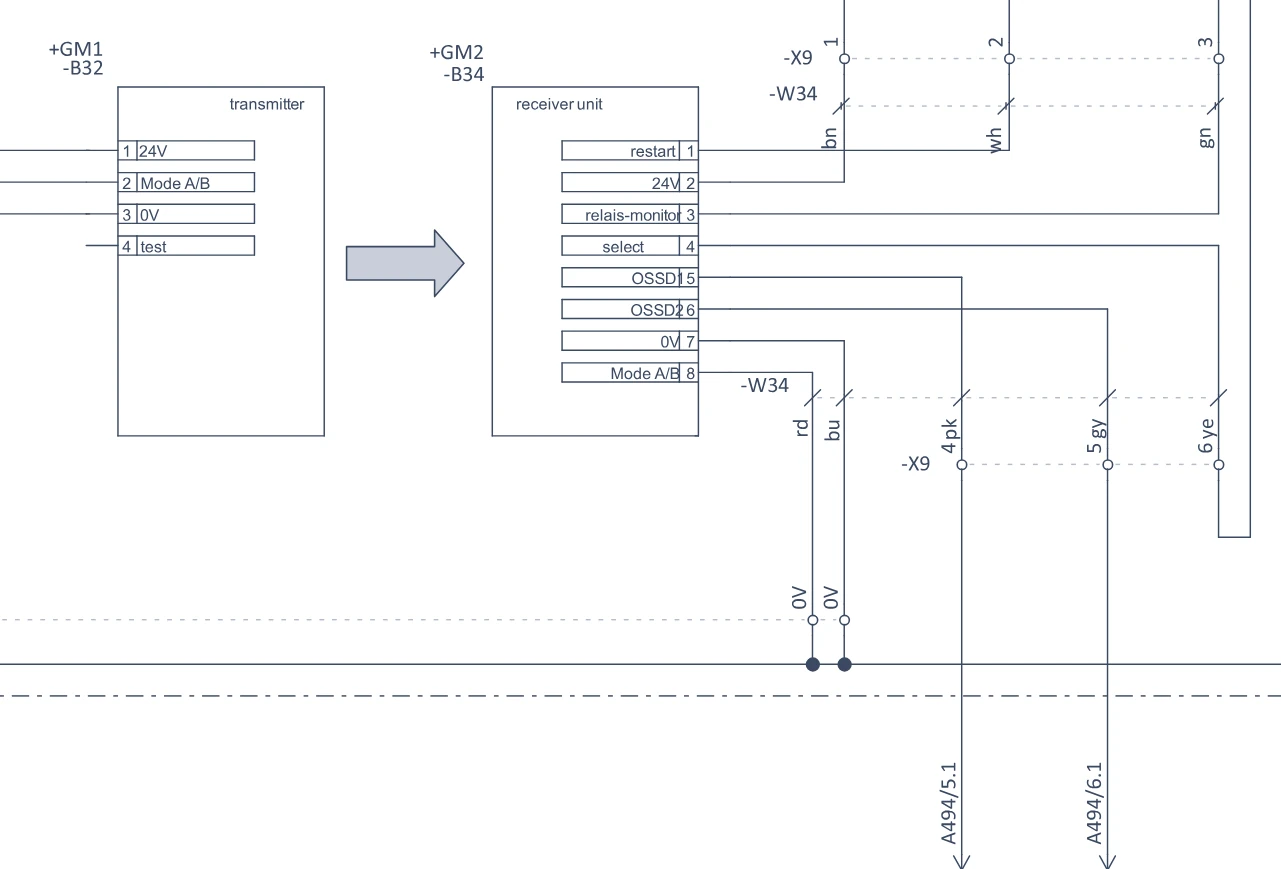
-94B1 is the product-detect photocell (SICK WL12-2P430) on conveyor 3. It's wired to input %I4.3 on DI module -A4, through terminal X1:11–12 in cabinet +SK3.
Pulled IMM01 power from the MES historian for Jan 12–18, 2026 and bucketed it by machine state:
The machine drew power while idle for 74 h — more than double its 31 h of actual production. Trimming idle time is the fastest saving here.
From the conveyor 3 manual (rev 04/2024):
"Clean the lenses of all photocells in the infeed section every 240 operating hours. Dust on a lens causes dropouts on the product-detect signal."
Your maintenance log shows the lens was last cleaned 312 h ago, past the 240 h interval. That lines up with the repeated photocell dropouts.
Yes — the Station 52 photocell replacement (Tomáš Marek, Apr 23) sits at the top of the Line 4 journal, indexed alongside every recent fix:
Open any entry for the full symptom, cause, and fix — so the next technician inherits it instead of rediscovering it.
Assembly line 4 is fully indexed and every source is active:
A plant lead can confirm coverage at a glance — and catch a source that's gone stale before someone hits the gap mid-fault.
Trusted by leading global manufacturers



An hour of unplanned downtime on a tier-2 automotive line.
We bet your last downtime took more hours than you would have liked.
On a press line or in a weld cell the part swap is quick. The time goes into finding the fault: which input dropped out and why the interlock will not close. The answer is in the PLC program and the drawings, and on second shift the controls engineer who knows them has gone home.
Edmund reads the Allen-Bradley and Siemens programs, EPLAN and AutoCAD drawings, OEM manuals and years of maintenance logs, and answers from all of them at once.
Allen-Bradley, Siemens TIA Portal and Omron projects, plus anything that compiles to IEC 61131-3, in one searchable model. Edmund answers with the routine or block and the line, so a technician can follow code they did not write.





142//Go Hall Zero 143IF #GoHallZero AND NOT #Cancel AND NOT #Stop THEN 144 IF NOT #status.enabled THEN 145 #state.enable.start := true; 146 END_IF; 147 #state.goHallZero.start := true; 148 #status.done := false; 149END_IF; 150//Position abnullen 151IF #SetPositionNull AND #status.online THEN 152 #state.setPositionNull.start := true; 153END_IF;
A tag resolves to the cabinet and the terminal a technician can put a hand on, on the press line or in the weld cell. Finding where a signal is wired takes seconds instead of a search through the drawing set.



 %I4.3
%I4.3 Alarm history and downtime records from SQL and MES. Edmund confirms or rules out a cause across shifts and lines, and comes back with a next step.


 MES ERP Time-series 10+ DB connectors
 OEM manuals, drive and robot documentation, datasheets and work instructions, answered with the exact page and paragraph.
"Clean the lenses of all photocells in the infeed section every 240 operating hours. Dust on a lens causes dropouts on the product-detect signal."
Work orders and handwritten shift logs become searchable. The last fix for the same fault comes back with the answer, at every plant in the group.
| Name | Status | Creator | Last updated | ||
|---|---|---|---|---|---|
| Photocell stop, conveyor 3 | Processed | M. Novák | 04/25/2026 | ||
| Photocell stop, conveyor 3 | Processed | P. Doležal | 04/16/2026 | ||
| Light barrier lenses cleaned | Processed | T. Marek | 04/12/2026 | ||
| Photocell stop, conveyor 3 | Processed | Night shift | 04/03/2026 |
A live count of what is indexed for each line, with the time of the last sync. A plant manager sees the gaps before someone hits one mid-fault.
ABB RAPID modules and the robot controller’s I/O, next to the PLC programs of the same line. Each signal comes with its address on the I/O module and the RAPID code that uses it. We are building it with an automotive supplier, on an end-of-line test cell.




The one that took a whole shift to find, or keeps coming back on second shift. We diagnose it for free: describe it below, then pick a time for a 20-minute call.
A sentence or two about the fault, and your details.
We agree which files we need. The 24 hours start when they arrive.
Why the line stopped and where it sits in your Allen-Bradley or Siemens program and drawings, with the source for each step.
Flexible packaging plant in Nový Bydžov, part of Amcor plc (NYSE: AMCR). Measured over one year.
“We use Edmund AI as an “invisible co-worker”: it fills the missing know-how, supports our technicians’ decisions, and speeds up finding and fixing faults.”
Yes. Edmund parses Allen-Bradley, Siemens TIA Portal and Omron projects, plus anything that compiles to IEC 61131-3, into one searchable model. It answers with the routine or block and the line number.
At first, the fault in a sentence or two and your details. On the call we agree which files matter, usually the PLC project or an export of it and the alarm log, and you hand them over. Missing pieces are fine: the answer says which sources it used.
Into Edmund on AWS, hosted in the EU (Ireland) or in the US, whichever you choose. It is encrypted and kept inside a single-tenant boundary for your company, and the language model runs under zero data retention, so nothing you send is kept for training.
Not for the first answer. It comes from the files you export. Live data from SQL or MES is connected later, if you want it, and Edmund only reads: nothing in your production systems gets changed.
Edmund s.r.o., from Ostrava in the Czech Republic. It came out of an industrial consulting practice and today runs on 130+ machines across four countries.
This project was realised via financial support from Technological Incubation program