

How AI reduces machine downtime in manufacturing
When a line stops, the clock runs while people wait and search. How AI shortens that time, and sometimes prevents the stop, with results from real plants.
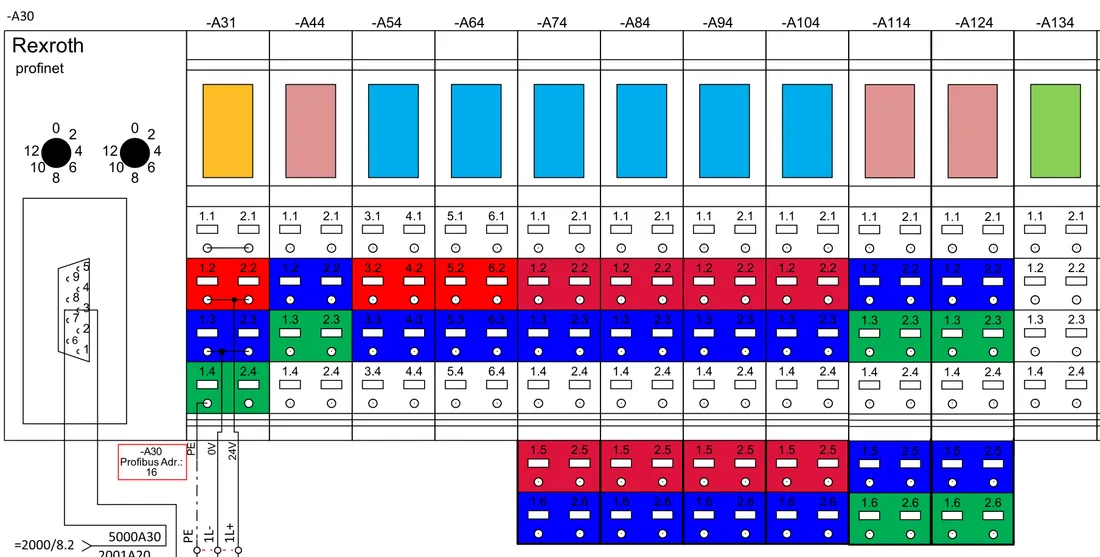
Picture this: line stops a little after two in the morning. The HMI shows a fault number and a few words that don’t explain much. The technician on shift hasn’t seen this one before. The colleague who might have… is asleep at home, and the drawings are in a cabinet in the maintenance office at the other end of the factory.
So the clock runs while someone decides whether it’s worth waking them up, and it keeps running while two people go through the drawings looking for the right sensor. While the repair itself might take just couple of minutes, WHEN they find the fault.
Anyone in maintenance knows a night like this. AI can give back a good part of it, and spare you some of those nights entirely. Each kind of AI helps at a different point, though, and some parts of a stop it can’t touch.
Why machines stop
Most unplanned downtime comes from a handful of causes:
- Wear. Bearings, belts, motors, gearboxes and pumps wear out slowly, and they usually give some warning before they go.
- Sudden faults. A sensor dies, a drive trips, a connection works loose, a product jams or a condition in the PLC logic quietly stops the sequence.
- Changeovers. A setting gets missed after a format change.
- Waiting. For the right technician, a spare part, a permit or a call back from the machine builder.
- Repeat faults. Fixed without anyone finding out why, so they come back.
Wear usually shows up in sensor data ahead of time. Most of the others arrive with little or no warning, which is why no single kind of AI covers all of them.
Where the time goes
The usually step-by-step story goes somewhat like this:
- The machine stops and someone notices.
- The team waits for the right person, a permit or a part.
- Someone works out where the fault is and why it happened.
- The fault gets fixed.
- The machine is tested and restarted.
The average time from the first step to the last is your MTTR, the mean time to repair. Below you can see how AI shortens different steps, and one of them makes the stop less likely to happen at all.
Predictive maintenanceFewer wear failures
An assistant on every shiftLess waiting for the one person who knows
Troubleshooting assistantFaster diagnosis
Physical workA motor takes as long to swap
SafetyLockout, permits and the restart stay with people
Root cause analysisFewer repeat failures
Where AI helps
Before the stop: catching wear early
This is the kind of AI most people picture first. In predictive maintenance, sensors on a motor or a pump track vibration, temperature or current, and a model learns what normal looks like for that machine. When a bearing starts to fail, the pattern drifts, and you can plan the repair for a scheduled stop instead of finding out at two in the morning.
The number you’ll hear most often is McKinsey’s: predictive maintenance typically cuts machine downtime by 30 to 50%. It’s a 2017 estimate with no published method, so treat it as a marketing promise, instead of reality.
Predictive maintenance works best on wear. A sensor that dies without warning or a product that jams barely shows up in condition data, so for those faults the help has to come after the line stops. When the system also tells you what to do about a coming failure, that’s prescriptive maintenance.
During the stop: finding the cause faster
The second kind of AI goes to work once the line is down. A troubleshooting assistant reads what the plant already has: the manuals, the electrical drawings, the PLC programs and years of maintenance notes. The technician asks a question the way they’d ask a colleague, and a good assistant replies with the page, the rung or the work order it got the answer from.
The best evidence so far is a field experiment at ETH Zurich. Researchers followed 19 technicians commissioning trains through 173 tasks. Those with a chatbot built on the project’s documents did significantly better than those without one, and the less experienced technicians gained the most.
A general chatbot doesn’t know your machine unless you upload its files, and there are limits on what it will take. We compared what ChatGPT, Copilot and Gemini can read from a plant in Edmund vs ChatGPT for machine troubleshooting.
During the stop: less waiting for the one person who knows
Most plants have one: the technician who has seen every fault on the line and remembers how each one was fixed. When they’re on shift, stops are short. When they’re not, the line waits, or somebody’s phone rings at home.
What they carry around is tribal knowledge, and little of it is written down anywhere the night shift can find it. People like that are getting scarcer, too. Many are retiring, and in the US alone up to 1.9 million manufacturing jobs could go unfilled by 2033.
The ETH result matters here too. If the less experienced technicians gain the most from an assistant, the newer people on nights can take on faults that used to wait for the morning shift.
After the stop: making sure it doesn’t come back
Some faults get fixed again and again, by different people on different shifts, and nobody connects them. The machine runs again, everyone moves on, and the cause is still in there, waiting for next time.
AI helps with the tedious part of a root cause analysis: finding every earlier time the fault showed up in the records, and tracing an error back to the logic and the wiring behind it.
At Moravia Cans, head of maintenance David Frajt puts it like this: “Using Edmund has led to a lower frequency of a specific failure, or even its complete elimination.”
AI in manufacturing: what the real data says
These numbers come from the manufacturing groups themselves, each measured in its own way, so they don’t line up perfectly. Most are from the World Economic Forum’s Global Lighthouse Network reports for 2025 and 2026.
The one we keep coming back to is Foxconn Industrial Internet in Vietnam. Operators there used to reset a stopped machine and carry on, with no evidence of what had caused the stop. A tool that lists the likely root causes and links them to the machine handbooks cut unplanned downtime by 90%.
Others measured repair time. At Haier, a repair assistant that reads IoT data, manuals and records halved mean time to repair. Schneider Electric in Shanghai brought it down by a third with generative AI tools for its maintenance team, and EGA Al Taweelah by 22% with AI-generated root cause explanations.
And one of ours: at Amcor Flexibles in the Czech Republic, Edmund made fault diagnosis 90% faster and repairs 26% shorter, which adds up to 440 hours a year for each plant. The gap between those two numbers is everything else in the downtime: the waiting, the fix and the restart, which a faster diagnosis doesn’t shorten.
- What remains
- Reduction
Mean time to repair
-
HaierA repair assistant that reads IoT data, manuals and records
-
Schneider Electric, ShanghaiGenerative AI tools for the maintenance team
-
Amcor Flexibles, with EdmundAnswers from the plant's PLC programs, drawings and journals
-
EGA Al TaweelahAI-generated root-cause explanations
Unplanned downtime
-
Foxconn Industrial Internet, VietnamLikely root causes linked to the machine handbooks
As reported by each site. World Economic Forum, Global Lighthouse Network 2025 and 2026; Amcor Flexibles case study.
Where AI doesn’t help, yet
AI has real limits on a plant floor, and it’s better to know them before you start:
- Missing data. AI can only read what it’s given. If the PLC programs live on one engineer’s laptop and the drawings sit in a cabinet, it won’t find them either. Getting the programs, the drawings and a year of maintenance records into one place is usually the first real project.
- Answers nobody can check. In one lab study, people with a plain fault tree found the fault 15% faster than people with an AI aid. AI isn’t faster by default. How the answer is presented matters, and it has to show where it came from, so a technician can check it quickly.
- Physical work. AI won’t swap a motor any faster, and it won’t make a missing spare part appear.
- Safety. Lockout, permits and the decision to restart stay with people, where they belong.
How to reduce machine downtime, with or without AI
Most of what works has nothing to do with AI:
- Log every stop with its start, its end and the reason. Without that, you’re guessing where the hours go.
- Start with the faults that keep coming back, and give them a proper root cause analysis.
- Replace wear parts on time, with preventive or predictive maintenance.
- Keep the spare parts that have failed before on the shelf.
- Put the documentation at the machine: the PLC program, the drawings and the manuals on a phone or tablet, instead of in an office at the other end of the plant.
- Make alarms specific, so the HMI names the device and where it is.
- Write standard work for your ten most common faults, so the fix doesn’t depend on who’s on shift.
- Give technicians an AI assistant that reads your own records, for the faults nobody on shift has seen before.
To put a number on the hours you win back, see what an hour of downtime costs or try the savings calculator.
How to start
Keep the first try small, and measure before you change anything:
- Pick the line that loses the most hours to unplanned stops.
- Measure where those hours go today: how many stops, how long they last, and which of the steps above eats the most time.
- Give the AI that line’s PLC programs, electrical drawings, manuals and the last twelve months of maintenance records.
- Use it on real faults for eight weeks, then compare repair times and repeat faults with where you started.
If you’d like to see it on your own line, send us a fault that’s been giving you trouble.
Frequently asked questions
How can AI reduce downtime in manufacturing?
In a few places. Predictive maintenance spots wear early, so the repair happens on your schedule. Troubleshooting assistants help technicians find the cause of a stop faster, even when the most experienced person isn’t on shift. AI-supported root cause analysis keeps the same fault from coming back.
Can AI predict machine failure?
For wear, often yes. With sensor data on bearings, motors and pumps, predictive models can see a failure coming. Sudden faults like a dead sensor or a jam give almost no warning, so there AI helps after the stop.
How much can AI reduce downtime?
It depends on the plant and on what you measure. McKinsey estimated 30 to 50% less machine downtime from predictive maintenance. Plants in the WEF Lighthouse Network report repair times 22 to 50% shorter with generative AI tools. At Amcor Flexibles, repairs got 26% shorter with Edmund.
What is unplanned downtime?
Any time a machine or line stops when it wasn’t scheduled to: breakdowns, faults, jams and waiting for repairs. Changeovers, cleaning and scheduled maintenance count as planned downtime.
What is the difference between AI predictive maintenance and an AI troubleshooting assistant?
Predictive maintenance tries to see a failure coming, from sensor data. A troubleshooting assistant helps once the machine has already stopped, by reading the plant’s programs, drawings and records to find the cause.