

Edmund vs ChatGPT for PLC and machine troubleshooting
It's 3 a.m., the line is down, and the fault message goes into ChatGPT. What ChatGPT, Copilot and Gemini can read from your plant, and what Edmund reads.
It’s three in the morning, the line is down, and the technician on shift does what a lot of people do now: types the fault message from the HMI into ChatGPT on their phone. The answer comes back in seconds, clear and confident. It could also apply to almost any machine in the world with that fault.
ChatGPT can explain what a fault code usually means and summarize a manual you upload, but it only knows your machine through the files you give it. For PLC and machine troubleshooting, that means exporting PLC programs, uploading PDFs within file limits, and checking every answer against the source before you act on it.
We’re not judging anyone for doing it. Several plant teams told us in discovery calls this year that they paste the fault message into ChatGPT when a machine stops. Below is what ChatGPT, Microsoft 365 Copilot, Google Gemini and Claude document about reading plant files, set against what Edmund reads, as of 29 September 2026.
Can ChatGPT troubleshoot machines?
For general questions, yes. A general AI assistant explains what an overcurrent fault on a drive usually means, how a safety relay is wired or how a PID loop behaves, in clear language and in any language. It can also draft a shift report or translate a vendor’s email.
For a specific machine, it can only troubleshoot as far as the files in the conversation allow. The answer to “why does conveyor 3 stop after every restart?” sits in that machine’s PLC program, wiring and fault history. None of that was in the chat at three in the morning.
Where ChatGPT’s answer comes from
A general assistant answers from two places: what the model learned in training, and the files you give it in a chat or project. Training covers public material, such as drive manuals published online and forum threads about common faults. It doesn’t include your PLC program, your wiring, the change an integrator made in 2019, or the ticket where someone fixed the same fault last spring. That last kind of knowledge often isn’t written down at all, which is a problem of its own: tribal knowledge.
Why does conveyor 3 stop after every restart?
 ChatGPT
 Copilot
 Gemini
 Claude
- Model trainingPublic material, such as drive manuals published online and forum threads about common faults
- Files in the chat or projectExports and PDFs that someone uploads, within file limits
Only there if someone uploads it
- This machine's PLC program
- Its wiring
- The change an integrator made in 2019
- The ticket where someone fixed the same fault last spring
The answerWhat this kind of fault usually means. Citations only for files in the conversation.

- PLC programsThe block, the line and the call site
- Electrical drawingsDown to the cabinet, the row and the clamp
- Manuals and datasheetsA cited PDF opens at its page
- Maintenance journalsHandwritten notes included
- MES, ERP and time-series dataRead-only
The answerThe likely cause on this machine, with a source for every finding, or a statement that there is none.
Can ChatGPT read PLC code?
ChatGPT reads PLC code as text, once someone has exported it. None of the four vendors lists native automation project files among its supported formats: TIA Portal archives, Studio 5000 .ACD files, CODESYS projects or EPLAN projects. The automation vendors offer export routes instead:
- Rockwell:
.L5Kand.L5Xfiles hold a Studio 5000 project as text and XML (Rockwell). - CODESYS: exports to PLCopen XML, where its own help says “100% compatibility cannot be guaranteed” (CODESYS).
- Siemens: the TIA Portal Openness API exports XML (Siemens).
- EPLAN: a project is a database (EPLAN), so schematics usually leave it as PDF.
So before the chatbot can help, someone has to export the right part of the right program, at three in the morning. If you’d rather read the program yourself, our PLC troubleshooting guide shows where to look first.
Can ChatGPT read PDFs and schematics?
It reads PDFs, with a limit that matters a lot for schematics. OpenAI’s file upload FAQ says that on every plan except ChatGPT Enterprise, PDFs are read as text and their images are discarded (OpenAI). On a wiring diagram, most of the information is the drawing. Claude reads the visual content of a PDF up to 100 pages (Anthropic), and Microsoft notes that Copilot sometimes “will focus only on the beginning of the document and then ignore anything beyond that” (Microsoft). A machine’s drawing set runs to hundreds of pages, as anyone who’s read one at a cabinet knows.
How much plant knowledge fits in ChatGPT, Copilot and Gemini
Each lets you attach files to a chat, project or agent, up to a limit:
- ChatGPT: 40 files per project on Business and Enterprise plans (OpenAI)
- Microsoft 365 Copilot: 20 uploaded files or 100 SharePoint files per agent (Microsoft)
- Gemini: 10 files per prompt (Google)
- Claude: 20 files per chat (Anthropic)
- ChatGPT40 files per project, on Business and Enterprise
- Microsoft 365 Copilot20 uploads per agent, or 100 SharePoint files
- Claude20 files per chat
- Gemini10 files per prompt
-
 EdmundThe plant's own set, connected once: 10,000+ files at one manufacturer
One square is one file. Each of these assistants can also search a company's SharePoint or Google Drive once it is connected, and that reaches far more files. None of them lists PLC project files among the formats it reads.
Put the PLC program, the electrical drawings, the manual for every drive and sensor and a few years of tickets for one line in the same place, and you’ll hit those limits quickly. Then every other line needs its own set, and someone has to keep them all up to date.
Checking an AI answer before acting on it
OpenAI’s own terms of use ask you not to rely on its output “as a sole source of truth or factual information” (OpenAI). NIST calls the underlying risk confabulation: “the production of confidently stated but erroneous or false content” (NIST AI 600-1). And IBM researchers who tested language models on industrial failure modes found them “fragile to perturbations, distractions, and inherent knowledge gaps” (FailureSensorIQ, NeurIPS 2025).
For a technician about to open a cabinet in the middle of the night, that decides whether an answer is usable at all. An answer that points to the program block, the drawing page or the ticket it came from can be checked in a minute.
What Edmund reads for PLC and machine troubleshooting
Edmund is an AI debugging platform for maintenance teams. It works from your plant’s own material:
- PLC programs from TIA Portal, Allen-Bradley and Omron projects. Answers point to the block, the line number and the call site.
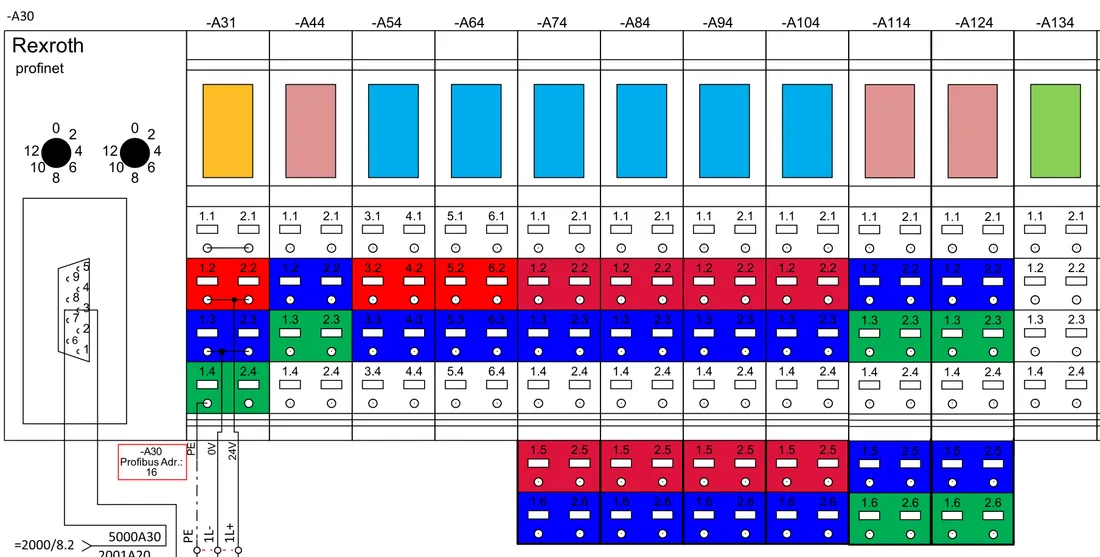
- Electrical drawings from EPLAN, CAD and AutoCAD PDF exports. A tag resolves to the cabinet, the row and the clamp position.
- Manuals, datasheets, measurement protocols and spare-parts catalogs.
- Maintenance journals and shift logs, including handwritten notes and photos, read with handwriting recognition.
- MES, ERP and time-series databases, connected read-only.
Every answer cites its source, and a cited PDF opens at the page it came from. When your data holds no answer, Edmund says so (how answers work). Technicians ask in plain language, send a photo of the HMI screen or dictate, in English, Czech, German, Polish or Slovak. Plant data is kept on AWS in the EU (Ireland) or in the US, as you choose, it isn’t used to train models, and Edmund only reads: nothing in your production systems gets changed.
Edmund vs ChatGPT, Copilot and Gemini: side by side
- Where the answer comes from. General assistants: model training plus the files uploaded to a chat or project. Edmund: your PLC programs, drawings, documents, journals and databases.
- PLC programs. General assistants: text exports such as L5X or PLCopen XML, within file and context limits. Edmund: TIA Portal, Allen-Bradley and Omron projects, answered with block and line.
- Electrical drawings. General assistants: PDFs, with the drawings discarded on ChatGPT plans below Enterprise. Edmund: EPLAN and CAD exports, down to the clamp.
- Fault history. General assistants: whatever someone uploads. Edmund: maintenance journals and service records, handwriting included.
- Checking an answer. General assistants: citations to files in the conversation, when there are any. Edmund: a source for every answer, or a statement that there is none.
- Training on your data. The business plans of all four vendors exclude customer data from model training by default (OpenAI, Microsoft, Google, Anthropic). Edmund doesn’t train on customer data.
When ChatGPT is the right tool
For general questions, a general assistant works well: what a fault family usually means, how a component works, how to word a report. Keep using it for that. The difference shows when the question is about one machine: why conveyor 3 stops after every restart, which output drives a valve, what was changed the last time this happened. Those answers are in your own program, drawings and history.
And if someone on your team suggests building a plant assistant on top of ChatGPT yourselves, it’s a fair question. We wrote up what to vibe-code and what to buy for exactly that conversation.
Choosing an AI for PLC troubleshooting: what to look for
- It reads your PLC programs in the formats your plant uses, and answers with the block and line it found.
- It reads your electrical drawings, including the drawing itself, down to the terminal.
- It keeps the fault history for the whole team, searchable by machine and symptom.
- It shows its source for every answer, and says when it has none.
- It keeps your data where you need it hosted, and out of model training.
- It works at the machine: on a phone, with a photo of the HMI, in the technician’s language.
We compared Edmund with two specialized products on the same points: Edmund vs Linexa for PLC troubleshooting and Edmund vs Datch for AI maintenance diagnostics.
What it looked like at Amcor
At Amcor Flexibles in Nový Bydžov, repairs got 26% shorter and fault diagnosis got 90% faster with Edmund, which saves the plant around 440 man-hours a year. “We’ve had a very positive experience with Edmund. The results have an immediate impact on the efficiency of our production processes,” says Martin Bryknář, PLC specialist at Amcor. For the wider picture, see how AI reduces machine downtime. And if you have a fault that ChatGPT couldn’t crack, send it to us.
Frequently asked questions
Is ChatGPT good for troubleshooting machines?
For general explanations of fault codes and components, yes. For a specific machine it needs that machine’s exported PLC program, drawings and history in the conversation, and its answers need checking against those sources.
Can ChatGPT write PLC code?
It can draft structured text or describe ladder logic from a prompt, and an automation engineer has to review and test the result. It doesn’t know your project unless you upload an export of it.
Can ChatGPT read a TIA Portal project?
Native TIA Portal archives aren’t among the documented file formats. Siemens’ TIA Portal Openness API exports blocks as XML, which can then be uploaded as text.
Is it safe to put plant data into ChatGPT?
Business, Enterprise and API data isn’t used for training by default, according to OpenAI. Data from individual plans may be used for training unless the user opts out, so use a business plan for plant data.
What is the difference between ChatGPT and Edmund?
ChatGPT is a general assistant that answers from training and uploaded files. Edmund is built for maintenance teams: it reads your PLC programs, drawings, manuals and journals and cites the source of every answer.
Vendor features change often. Everything above about ChatGPT, Copilot, Gemini and Claude was checked against their own documentation on 29 September 2026.