

Edmund vs Linexa: AI for PLC troubleshooting compared
Both read the PLC project. The difference is who's asking. Linexa vs Edmund for PLC troubleshooting: what each reads, who uses it, and where each fits.
Ask Linexa or Edmund why a machine stopped, and both will go to its PLC project for the answer. Both use AI for PLC troubleshooting. The real difference is who’s usually asking.
If it’s a controls engineer at a desk, planning a code change, Linexa is built around that job, with PLC backup, version control and code changes. If it’s a maintenance technician standing at a stopped line at night, Edmund is built for that moment, and it also reads the electrical drawings, manuals and fault history around the PLC.
We make one of these products, so take our view with that in mind. Everything below about Linexa comes from its public pages and press coverage, as of 29 September 2026, with links so you can check.
Linexa in brief
Linexa GmbH is a Munich company founded in late 2025. In April 2026 it raised a €2M pre-seed round led by Project A (Tech.eu). Its site describes the product as one model of a plant’s automation files: “Linexa parses and connects your automation files into one model, so you can trace any signal or problem through the control logic and turn changes into validated code” (Linexa).
Machine troubleshooting is one of Linexa’s use cases. The others are PLC backup, version control, generating and validating code changes, network mapping, and structuring signals for MES, OEE and predictive maintenance. A PLC Engineering Agent is in early access.
Edmund in brief
Edmund is an AI debugging platform for maintenance teams, built out of an industrial consulting practice in Ostrava, in the Czech Republic. In 2026 it runs on more than 130 machines across four countries (about). When a line stops, a technician asks Edmund in plain language and gets the likely cause with a source for each finding.
What each reads for PLC troubleshooting
Linexa “reads the PLC and HMI projects behind the machine and connects alarms, signals, I/O, and control logic”, and traces across several PLCs when their projects are available (Linexa FAQ). It works with PLC, HMI and SCADA projects and can collect them from PLCs, HMIs, drives, switches and other OT devices. Live data is optional. For code changes, users can add specifications, tickets, I/O lists, libraries and programming standards. Linexa’s pages don’t mention electrical schematics, manuals, maintenance history or spare parts.
Edmund reads:
- PLC programs from TIA Portal, Allen-Bradley and Omron projects, answering with the block, the line and the call site.
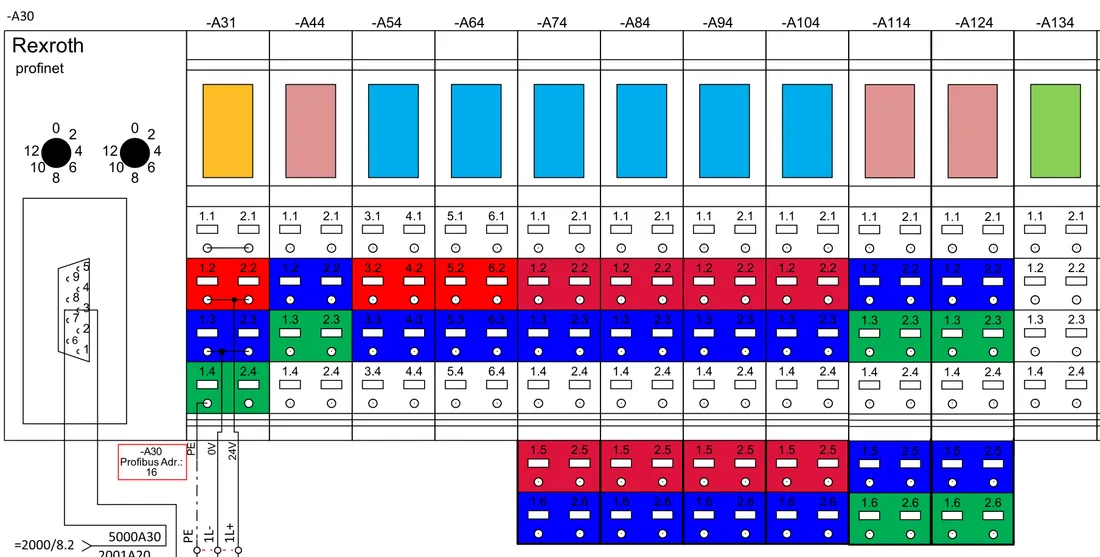
- Electrical drawings from EPLAN, CAD and AutoCAD PDF exports, resolving a tag to the cabinet, the row and the clamp.
- Manuals, datasheets, measurement protocols and spare-parts catalogs.
- Maintenance journals and shift logs, handwritten notes included.
- MES, ERP and time-series databases, read-only.
Why the rest of that list? Because it’s what the technician at the stopped line needs next. When a sensor input is missing, the program says which input the sequence is waiting for, the drawing says which terminal and cable carry it, and the maintenance journal says whether the same sensor failed on this line before. That last part is usually in somebody’s head, which is the tribal knowledge problem.
 |  | |
|---|---|---|
| Sources | ||
| Control projects | PLC, HMI and SCADA projects: TIA Portal, Studio 5000, CODESYS, TwinCAT | PLC programs: TIA Portal, Allen-Bradley and Omron, answered with block and line |
| Electrical drawings | Not mentioned | EPLAN, CAD and PDF exports, down to the clamp |
| Manuals and datasheets | Not mentioned | Manuals, datasheets and spare-parts catalogs |
| Maintenance history | Not mentioned | Journals and shift logs, handwriting included |
| Live and plant data | Live data, optional | MES, ERP and time-series databases, read-only |
| Use | ||
| Built for | Automation and controls engineers | Maintenance technicians at the line |
| Beyond troubleshooting | PLC backup, version control, code changes, network mapping | Part lookup and logging the fix in the maintenance journal |
| Hosting | Cloud, hybrid, on-premises or upload-only | AWS in the EU or the US |
From each company's public pages on 29 September 2026. An open circle means the pages do not mention it.
PLC platforms supported
Linexa’s FAQ names TIA Portal, Studio 5000, CODESYS and TwinCAT. Edmund supports TIA Portal, Allen-Bradley and Omron today and lists Codesys and Beckhoff as coming soon. So if your plant runs CODESYS or TwinCAT, you’ll find those named on Linexa’s site today.
Who uses each: automation engineers or maintenance technicians
Linexa is built around the automation engineer’s workflow. Projects are uploaded or collected into a web application, analysis and code changes are prepared there, and engineers deploy in their own IDE. Linexa states that it “never deploys autonomously to the controller”.
Edmund is built for the technician at the machine during a stop. It runs in the browser on any device, with a QR code on each machine that opens its chat. Technicians type, dictate or send a photo of the HMI screen, in English, Czech, German, Polish or Slovak, and every answer cites the document, drawing or program line it came from. Edmund only reads and never writes to production systems. If you want to see what that search looks like done by hand, our PLC troubleshooting guide walks through it.
Hosting and data
Linexa offers cloud, hybrid, on-premises and upload-only deployments, and states that files are never used to train models (Linexa). Edmund keeps plant data on AWS in the EU (Ireland) or in the US, as you choose, and doesn’t use customer data to train models.
Published results
Edmund publishes named case studies. At Amcor Flexibles, repairs got 26% shorter and fault diagnosis 90% faster, saving around 440 man-hours a year. At Moravia Cans, the head of maintenance reports “a lower frequency of a specific failure, or even its complete elimination”.
Linexa is a younger company. Its site quotes individual endorsers rather than named customer case studies, and in April 2026 Munich Startup reported that one of Germany’s largest food manufacturers was already using it (Munich Startup).
Linexa vs Edmund: side by side
- Built for. Linexa: automation and controls engineers. Edmund: maintenance technicians at the line.
- Reads. Linexa: PLC, HMI and SCADA projects, with live data optional. Edmund: PLC programs, electrical drawings, manuals, maintenance journals and read-only databases.
- Beyond troubleshooting. Linexa: PLC backup, version control, code changes, network mapping. Edmund: fault diagnosis, part lookup and logging the fix in the maintenance journal.
- Answers. Linexa: traces signals through the control logic. Edmund: cites the program line, drawing page or journal entry for every finding.
- Hosting. Linexa: cloud, hybrid, on-premises or upload-only. Edmund: AWS in the EU or the US.
Looking for a Linexa alternative?
Edmund is a Linexa alternative for maintenance teams that need the diagnosis at the line, drawn from the program together with the wiring, the manuals and the plant’s fault history. Linexa is the better fit for controls engineering teams whose main job is PLC backup, version control and writing and validating code changes. And a plant can perfectly well run both: one in engineering, one on the shop floor.
If you’re weighing Edmund against general AI assistants instead, see Edmund vs ChatGPT for PLC and machine troubleshooting, and for another specialized tool, Edmund vs Datch. For what faster diagnosis is worth, see MTTR in maintenance. Or send us a fault and see Edmund’s answer on your own machine.
Frequently asked questions
What is Linexa?
Linexa is a Munich startup, founded in late 2025, whose software connects a plant’s PLC, HMI and SCADA projects into one model for troubleshooting, PLC backup, version control and validated code changes.
Does Linexa read PLC code?
Yes. Linexa’s FAQ says it reads the PLC and HMI projects behind a machine, and it names TIA Portal, Studio 5000, CODESYS and TwinCAT.
What is the difference between Linexa and Edmund?
Linexa is built for automation engineers and focuses on the control logic and code changes. Edmund is built for maintenance technicians and reads the PLC program together with the electrical drawings, manuals and maintenance history.
Which one is better for PLC troubleshooting on the shop floor?
For a technician diagnosing a stop, the answer usually needs the program, the wiring and the fault history together, which is what Edmund reads. For engineers changing and validating PLC code, Linexa covers more of that workflow.