


What is reactive maintenance and when does it make sense?
A cabinet light and a gearbox fail on the same day. Both are reactive maintenance, and only one was a good idea. What it costs, how common it is and when it makes sense.
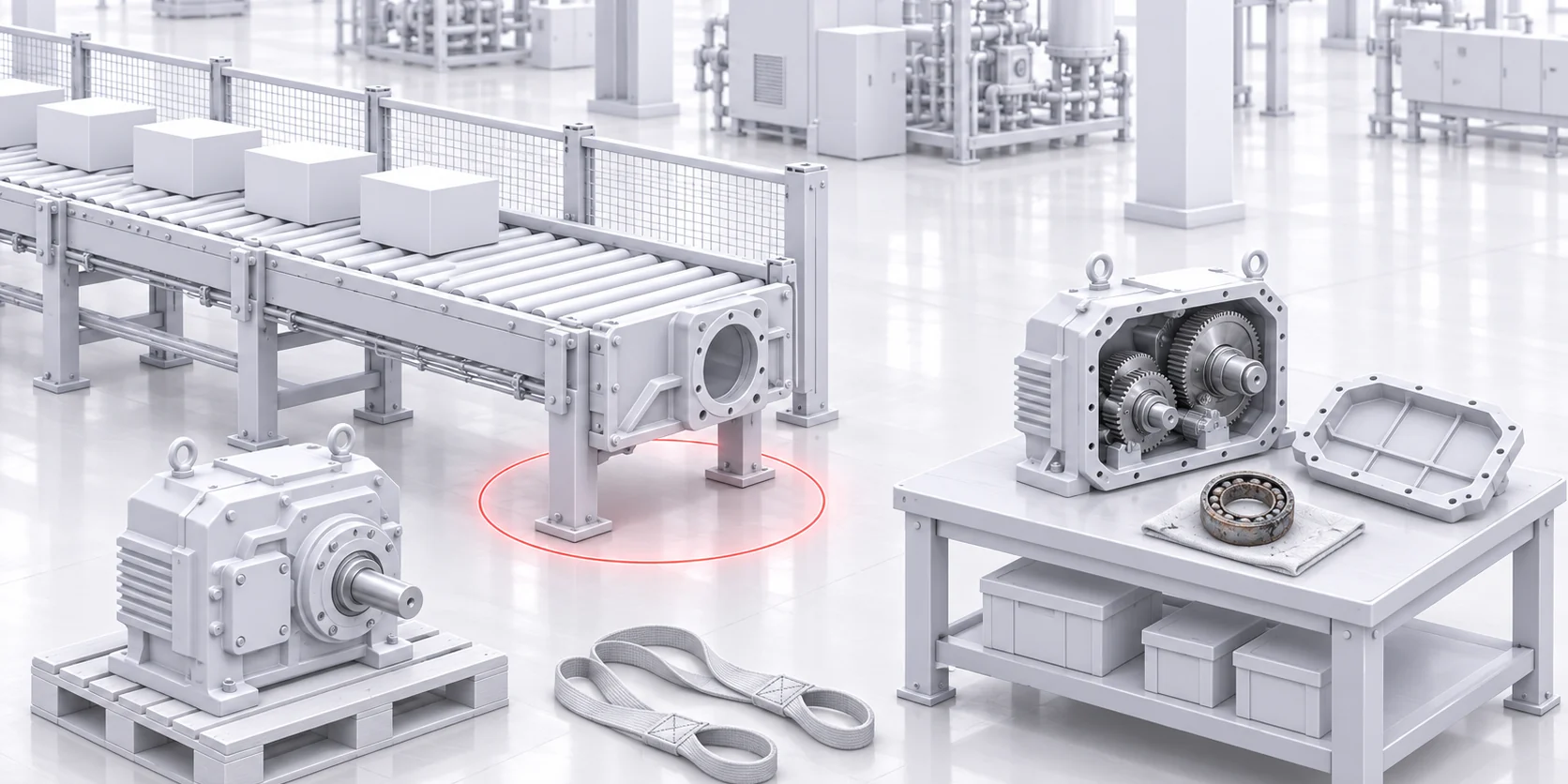
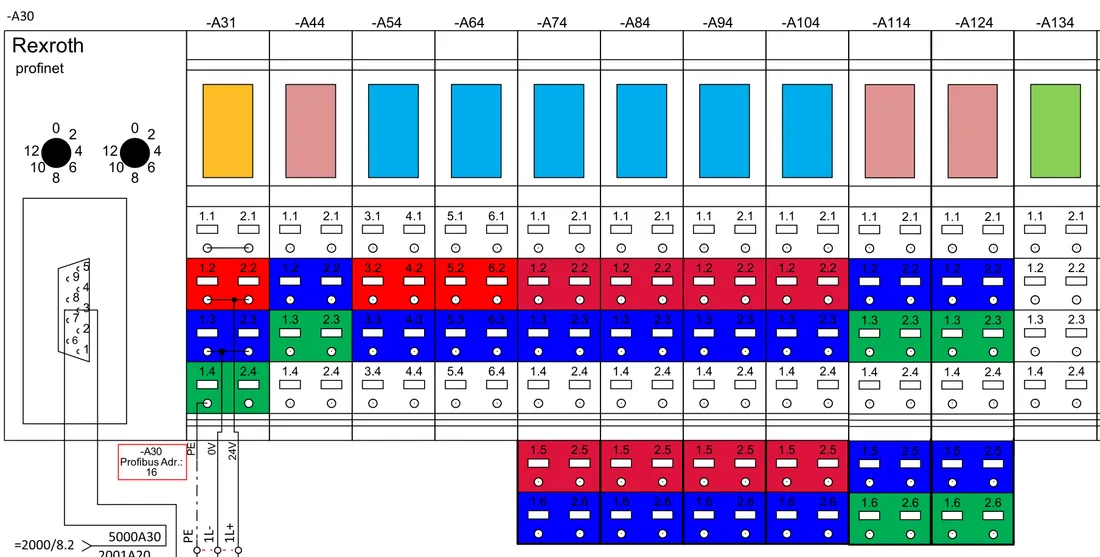
Two things fail in the same plant on the same Tuesday. The light inside a control cabinet burns out, and someone swaps it the next time they’re passing. A gearbox bearing on the packaging line seizes, and the line stands for most of the shift while a technician finds the cause, waits for the part and rebuilds the gearbox.
Both were repaired after they failed, so both count as reactive maintenance. Letting the cabinet light fail is a perfectly reasonable choice. The gearbox was probably only maintained this way because nobody ever decided otherwise.
Reactive maintenance means repairing or replacing equipment after it has failed, with no work done beforehand to prevent the failure. You’ll also hear it called breakdown, repair, fix-when-fail or run-to-failure maintenance (NASA). For cheap equipment that doesn’t matter much, it can be the right choice. For equipment that stops production, it’s usually the most expensive way to maintain it, because the failure decides when the work happens.
Reactive maintenance definition
In reactive maintenance, the failure itself triggers the work. Nobody inspects, measures or replaces anything in advance; the team responds when something breaks. The US Department of Energy’s maintenance guide calls it “the ‘run it till it breaks’ maintenance mode” (DOE FEMP), which is about as honest as a government document gets.
The standards call the same work corrective maintenance: “maintenance carried out after fault detection to effect restoration” (IEC 60050-192). Plants say reactive when that’s the main way they look after an asset.
Reactive vs corrective vs breakdown maintenance
People use these terms interchangeably all the time. Strictly, they mean different things:
- Corrective maintenance is any repair after a fault is found, whether or not the equipment has stopped. A standby pump found dead during a weekly test and repaired the next day is corrective work, even though production never stopped.
- Breakdown maintenance is repair after the equipment has stopped working.
- Reactive maintenance is the habit of waiting for failures and responding to them, usually in a hurry.
- Run to failure is a deliberate decision to let a specific failure happen, because nothing can prevent it at a reasonable cost and the failure is safe.
Reactive maintenance examples
- The gearbox: a bearing seizes on a packaging line, and the line stops until a technician finds the cause, the part arrives and the gearbox is rebuilt.
- A proximity sensor fails at random and the machine stops with an alarm. The sensor is replaced after the stop.
- The cabinet light burns out and gets replaced at the next convenient moment. That one is run to failure by choice, because nothing stops.
How common reactive maintenance still is
More common than most plants would like to admit. US manufacturers in a NIST survey estimated that 45.7% of their 2016 machinery maintenance and repair spending went to reactive work, against 31.8% for preventive and 17.3% for predictive maintenance (NIST, 2020).
In Plant Engineering’s 2020 maintenance study, 60% of respondents said they run at least some equipment to failure, and 76% use preventive maintenance (Plant Engineering and ATS).
What reactive maintenance really costs
The repair is often the smallest part of the bill. A failure nobody planned for, like that gearbox, brings:
- Unplanned downtime: the line stops when the failure says so, not when the production plan does.
- Waiting for the right technician, for the part, sometimes for an outside service.
- Searching for the cause under pressure, often without the person who knows the machine best.
- Secondary damage: a failing bearing can take the shaft or the seal around it with it.
- Expedited parts and overtime.
Planned2 h in a planned stop, restart included
After a breakdown8.2 h of unplanned downtime
- Noticed and reported0.3 h
- Waiting for a technician0.7 h
- Finding the cause1.2 h
- Waiting for the part3 h
- Repair, bearing and damaged seal2.5 h
- Restart and check0.5 h
The repair itself takes an hour longer, because the failing bearing damaged a seal. Most of the extra time is waiting and finding the cause, and all of it is unplanned.
An illustration. The durations are made up to show where the extra time goes.
If you want to put a number on your own line, our post on the cost of downtime walks through it step by step.
The NIST data show both sides of the trade. The quarter of respondents relying most on reactive maintenance reported downtime of 13% of planned production time, against 4% for the quarter relying least on it. In a peer-reviewed analysis of the same data, the half least reliant on reactive work spent 81.7% more on direct maintenance relative to shipments, and reported 52.7% less unplanned downtime and 78.5% fewer defects (International Journal of Prognostics and Health Management, 2021). They paid more up front and lost far less time to breakdowns.
Advantages and disadvantages of reactive maintenance
Advantages:
- No upfront cost: no inspections, sensors or planning time.
- Little effort for equipment that doesn’t matter much.
- The right call for cheap, non-critical items whose failure has no real consequence.
Disadvantages:
- Unplanned downtime on equipment that stops production.
- A higher cost per repair, from waiting, overtime, expedited parts and secondary damage.
- Safety risk from urgent repairs under pressure, and from failures that can hurt someone.
- Repeat failures, because a team that’s always reacting rarely has time to find root causes.
When reactive maintenance makes sense
Run to failure is a legitimate strategy when you choose it on purpose, as with the cabinet light. The reliability standard SAE JA1011 allows it only when no suitable scheduled task exists and the failure has no safety or environmental consequences (SAE).
NASA puts it plainly: “Run-to-Failure (RTF) is a conscious decision and is acceptable for some equipment”, and “candidate systems or machines for Run-to-Failure are usually low-cost, easily repaired, and non-critical.” Its examples include non-critical electric motors under 7.5 horsepower, restroom exhaust fans and small water heaters (NASA).
The decision is made per failure mode, in advance, and written down, with the spare part and the repair procedure ready for when the failure comes. The same item can still keep tasks for its other failure modes, such as lubrication.
Protective devices need a separate look. When a relief valve, a guard interlock or a standby pump fails, nobody notices until the thing it protects against actually happens. SAE JA1011 allows run to failure for these hidden failures only if that combined event has no safety or environmental consequences. Otherwise you need a scheduled test that finds the failure, or a design change.
Reactive vs preventive vs predictive maintenance
- Reactive: repair after the failure.
- Preventive (time-based): replace or service at fixed intervals of time, cycles or output, before the failure.
- Predictive: monitor the condition and forecast the failure, so the repair can be planned. More in what is predictive maintenance.
Our overview of the types of maintenance puts these next to condition-based and prescriptive maintenance.
How to reduce reactive maintenance
- Know your share. Track how many maintenance hours are planned and how many are reactive, per line, and how often each machine fails (MTBF is the number for that).
- Rank your assets by what their failure costs, and choose a strategy for the critical ones. The gearbox should have been on that list.
- Find the root cause of repeat failures with a root cause analysis.
- Stock the parts that failed before.
- Move items with a measurable warning to condition monitoring, and items that wear out at a predictable age to replacement at a fixed interval.
Make the reactive work that remains faster
No plant gets to zero reactive work. Sensors and electronics fail at random, and some failures give no warning at all. For those, much of the cost depends on how long the line is down, which is what MTTR measures. Spare parts on the shelf shorten the wait for the part. On an unfamiliar fault, the search for the cause is the other part your team can shorten, and for control faults a fixed order of checks helps a lot.
That’s where Edmund works. When a line stops, a technician asks in plain language, and Edmund answers from the plant’s PLC programs, electrical drawings, manuals and maintenance journals, with the source for each finding. At Amcor Flexibles, fault diagnosis got 90% faster and repairs got 26% shorter. If you have a breakdown that keeps eating whole shifts, tell us about it.
Frequently asked questions
What is reactive maintenance in simple terms?
Fixing equipment after it breaks, instead of maintaining it to prevent the failure.
What is an example of reactive maintenance?
Replacing a motor bearing after it seizes and stops the line, rather than at a planned interval or when vibration readings show it wearing.
What is the difference between reactive and corrective maintenance?
Corrective maintenance is any repair after a fault is found, including faults found during an inspection before anything stops. Reactive maintenance is the habit of waiting for failures and responding to them.
Is reactive maintenance ever a good strategy?
Yes, for items whose failure is cheap, safe and doesn’t stop production, when you choose it on purpose and write it down as run to failure.
Why is reactive maintenance expensive?
The failure picks the time, so the repair comes with unplanned downtime, waiting for people and parts, overtime, and sometimes damage to the parts around the one that failed.